The Role of Tech in Environmental Sustainability Explained
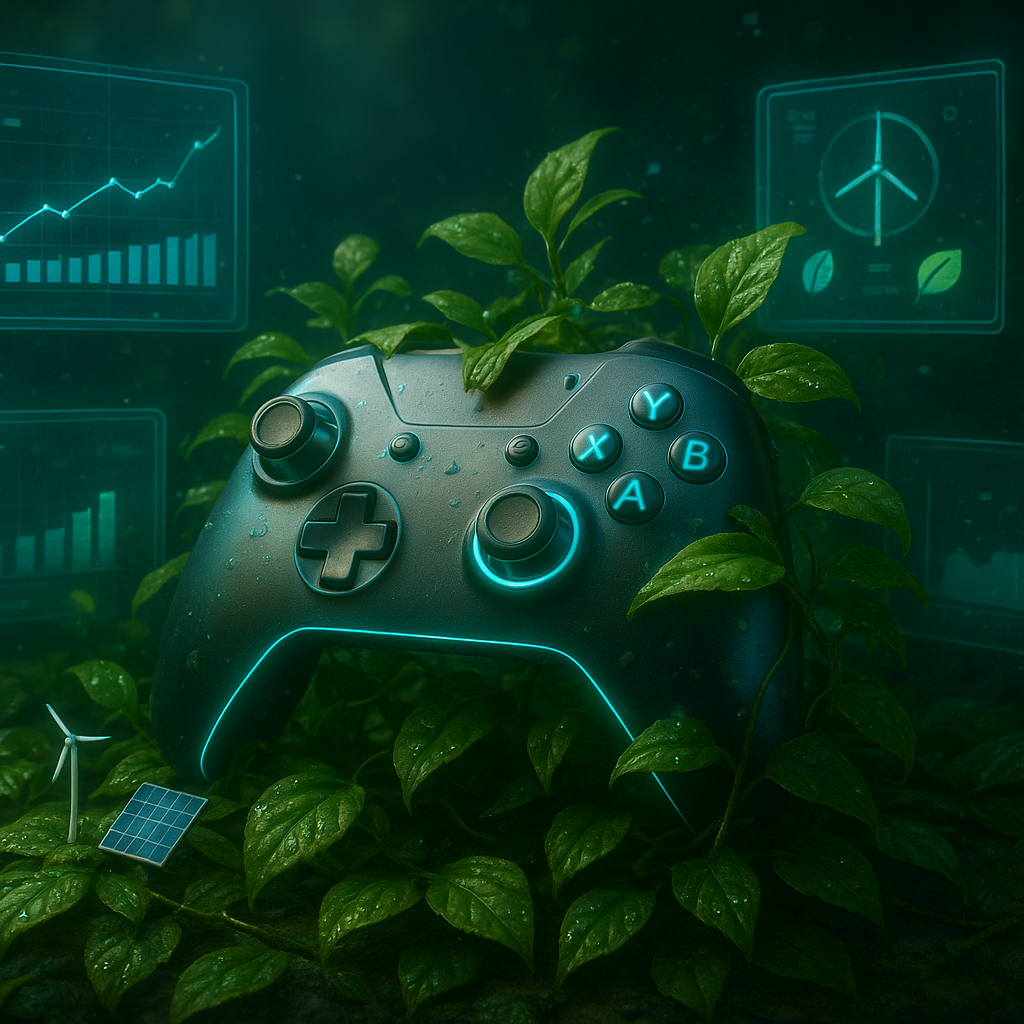
Discover how technology is reshaping environmental sustainability — from AI climate tools to smart grids — and whether tech helps or harms our planet’s future.

Discover how technology is reshaping environmental sustainability — from AI climate tools to smart grids — and whether tech helps or harms our planet’s future.

LiDAR technology is revolutionising smartphone photography, allowing users to capture images with unprecedented clarity and detail. By enhancing depth perception and enabling precise 3D mapping, LiDAR improves focus accuracy and low-light performance in smartphone cameras. This advancement not only elevates traditional photography but also opens new avenues for augmented reality experiences. With LiDAR, smartphones can … Read more

Foldable smartphones are making significant waves in the mobile technology landscape, reshaping how consumers interact with their devices. As users increasingly seek versatile and innovative designs, these devices strive to meet modern demands for functionality and portability. Foldable smartphones not only offer the convenience of larger screens in a compact form but also drive advancements … Read more
The advent of brain-computer interfaces (BCIs) marks a significant breakthrough in neuroscience and technology. By establishing a direct pathway for communication between the brain and external devices, BCIs have the potential to revolutionise how individuals interact with their environment. As they evolve, BCIs could transform lives by enabling those with physical impairments to regain control … Read more

As smart homes become increasingly prevalent, the debate around balancing privacy and convenience intensifies. Homeowners often find themselves at a crossroads, choosing between the ease of automated systems and the protection of their personal information. Achieving a harmonious balance is essential, as it allows individuals to enjoy the benefits of technology while maintaining control over … Read more

The landscape of technology is evolving rapidly, and quantum computing is poised to transform mobile devices significantly. As smartphones become more integral to daily life, the prospect of integrating quantum computing into these devices raises questions about capabilities and limitations. By 2025, quantum computers may enable mobile computing to perform complex calculations and process information … Read more

The rise of IoT technology has transformed how devices communicate and share data. As these devices become more prevalent, the demand for efficient data processing increases. Edge computing significantly enhances IoT performance by processing data closer to the source, which reduces latency and bandwidth usage. By shifting data processing from central cloud servers to the … Read more

Neural networks are a fundamental component of modern artificial intelligence, integrating seamlessly with machine learning and deep learning techniques. These systems mimic the human brain’s interconnected neuron structure to process and analyse vast amounts of data. By resembling biological processes, neural networks excel at tasks such as image recognition, natural language processing, and predictive analytics. … Read more

The intersection of virtual reality (VR) and smart home technology is revolutionising the way individuals interact with their living spaces. By integrating VR with smart home devices, users can visualise and control their environments in a more immersive and intuitive manner. This technology enhances user experience and improves the efficiency of smart home systems, making … Read more

The rise of artificial intelligence has begun to shape the way everyday gadgets function, seamlessly integrating advanced technology into daily life. This integration enhances user experience by making devices smarter, more efficient, and capable of adapting to personal needs. As AI continues to evolve, it transforms ordinary items into intelligent tools that facilitate routine tasks … Read more