
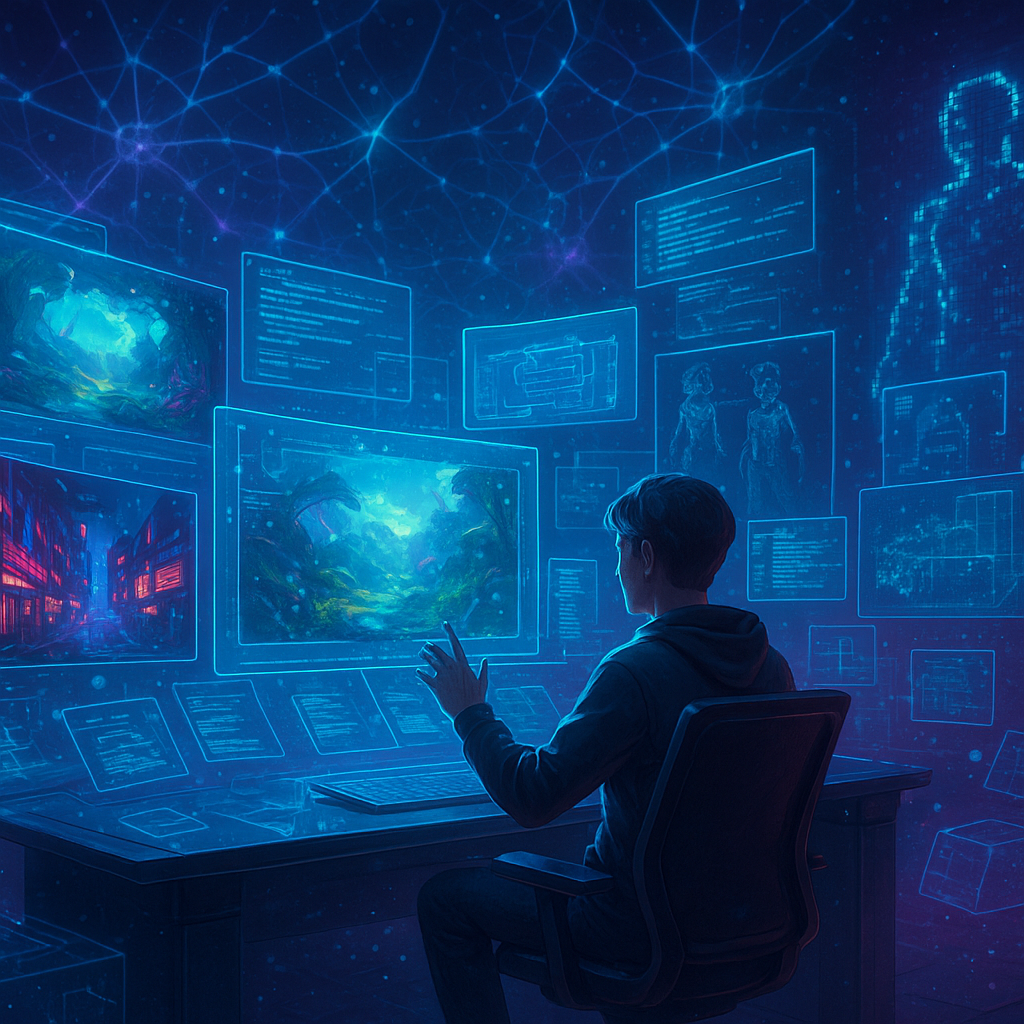
Artificial intelligence has quietly reshaped almost every corner of modern life, but nowhere is its influence more visible — or more exciting — than in video games. From the enemies that hunt you through darkened corridors to the procedurally generated worlds you explore, AI is no longer just a background process. It has become a central pillar of how games are designed, built, and experienced. And as the technology matures, the conversation around it is growing louder, more complex, and frankly, more fascinating.
This article explores how AI is changing game design from the ground up — what it’s already doing, where it’s heading, and what it means for the players and developers caught in the middle of this technological shift.
A Brief History: AI in Games Wasn’t Always This Sophisticated
It’s easy to forget that AI in games has a surprisingly long history. The ghosts in Pac-Man (1980) each had distinct behavioural patterns — Blinky chased directly, Pinky tried to cut you off, and Inky behaved somewhat unpredictably. For the time, this was genuinely clever design. But compared to what’s possible today, it was essentially a set of if-then rules dressed up to look intelligent.
For decades, game AI largely relied on finite state machines and scripted decision trees. Characters reacted to predefined triggers in predefined ways. It worked well enough, but players eventually learned the patterns, and immersion suffered. The real turning point came when developers began exploring machine learning, neural networks, and more recently, large language models and generative AI systems.
Today, the gap between 1980s rule-based AI and what’s being deployed in modern games is roughly equivalent to the gap between a pocket calculator and a supercomputer.
How AI Is Currently Used in Game Design
Procedural Content Generation
One of the most established uses of AI in game development is procedural content generation (PCG) — the algorithmic creation of game content like maps, levels, items, and quests. Games like No Man’s Sky famously used procedural generation to create an entire galaxy of planets, each with unique terrain, flora, and fauna. Minecraft, Hades, and the Diablo series have all leaned heavily on similar principles.
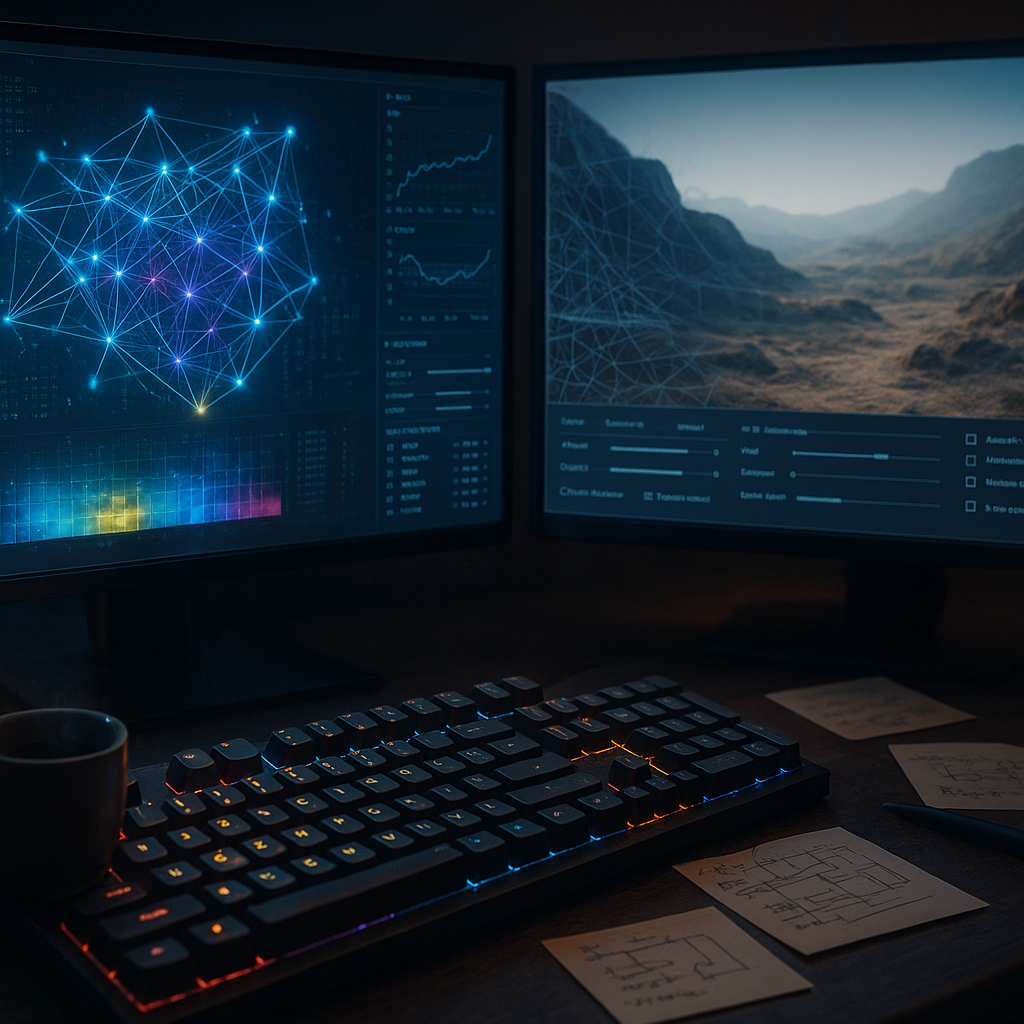
What makes modern PCG different from older methods is that it increasingly incorporates machine learning to ensure the generated content is not just random, but meaningful. AI can now analyse player behaviour and adapt generated content to match skill level, preferred playstyle, or narrative context — something that pure random generation could never reliably achieve.
NPC Behaviour and Enemy AI
Non-player character (NPC) behaviour has traditionally been one of game design’s trickiest challenges. Players are remarkably good at spotting artificial patterns, and the moment an NPC does something obviously scripted, the illusion of a living world collapses.
Modern AI approaches, including behaviour trees, utility-based systems, and increasingly, reinforcement learning, allow NPCs to make decisions that feel far more organic. Alien: Isolation remains one of the most celebrated examples — its Xenomorph AI uses two separate systems that observe the player and share information, creating an antagonist that genuinely seems to learn and adapt. Players frequently report the creature feeling “alive” in a way that few games have matched since.
More recently, developers have begun experimenting with large language models to give NPCs dynamic, contextual dialogue — meaning characters can respond to player actions in ways that weren’t explicitly scripted. Startups like Inworld AI are already providing tools that allow game developers to build NPCs with persistent memory, emotional states, and conversational depth.
Adaptive Difficulty and Player Experience
AI is also transforming how games manage difficulty. Traditional difficulty settings — easy, medium, hard — are blunt instruments. A player might breeze through combat encounters but struggle with platforming, or vice versa. Static difficulty settings don’t account for this nuance.
Dynamic difficulty adjustment (DDA), powered by AI, changes this by monitoring player performance in real time and subtly tweaking parameters to keep the experience in the optimal challenge zone — difficult enough to feel rewarding, but not so punishing that it becomes frustrating. Resident Evil 4 pioneered this concept with its “adaptive” enemy system, and the principle has since been refined and adopted across countless titles.
Generative AI: A New Frontier for Game Development
The arrival of generative AI tools — capable of producing images, music, dialogue, and even code from simple text prompts — has triggered a genuine rethink of what game development looks like as a process.
According to a 2023 survey by the Game Developers Conference (GDC), approximately 49% of game developers reported that they or their studio were already using AI tools in their development workflow. Tools like Midjourney, Stable Diffusion, and GitHub Copilot have made their way into indie studios and AAA pipelines alike, dramatically reducing the time and cost required to produce certain types of content.
Speeding Up Asset Creation
For smaller studios, generative AI has been something of a revelation. Creating textures, concept art, ambient soundscapes, and even rough animation rigs previously required significant time and specialist skills. AI tools can now produce usable first drafts of many of these assets in seconds, freeing up human artists and designers to focus on polish, storytelling, and the creative decisions that genuinely require a human touch.
Studios like Ubisoft have openly discussed using AI tools to assist with NPC dialogue generation and level design suggestions. Meanwhile, smaller indie developers have used generative AI to punch well above their weight class in terms of visual fidelity and content volume.
Does Generative AI Enhance or Constrain Creativity?
This question sits at the heart of the current debate around AI in game design, and it doesn’t have a tidy answer. Critics argue that over-reliance on generative AI risks homogenising game aesthetics — if everyone is using the same models trained on the same datasets, the results can start to feel eerily similar. There’s also a legitimate concern about job displacement, particularly for concept artists, writers, and voice actors whose work is most directly replicable by current AI tools. These tensions mirror broader debates about AI’s impact on creative industries that extend well beyond gaming.
On the other side of the argument, many designers describe generative AI as a powerful creative partner rather than a replacement. When used well, it can help break through creative blocks, rapidly prototype ideas, and explore stylistic directions that might never have been considered without a fast, low-stakes way to experiment. The key distinction seems to be whether AI is driving creative decisions or serving human ones.
The Future of AI in Game Design
Fully AI-Generated Games
Research from organisations like DeepMind has demonstrated AI systems capable of playing and designing games simultaneously — learning the rules of a game and then generating new levels, challenges, or even entirely new games based on what it has learnt. While fully AI-generated games at commercial quality remain some years away, the trajectory is clear. Titles designed collaboratively between human developers and AI systems are already beginning to appear.
Personalised Gaming Experiences
Perhaps the most transformative long-term application of AI in gaming is true personalisation. Imagine a game that restructures its narrative, adjusts its tone, generates unique side quests, and modifies its world based on your specific behaviour, preferences, and even emotional state. This kind of deeply personalised experience, once the stuff of science fiction, is technically within reach given current trajectories in machine learning and player analytics.
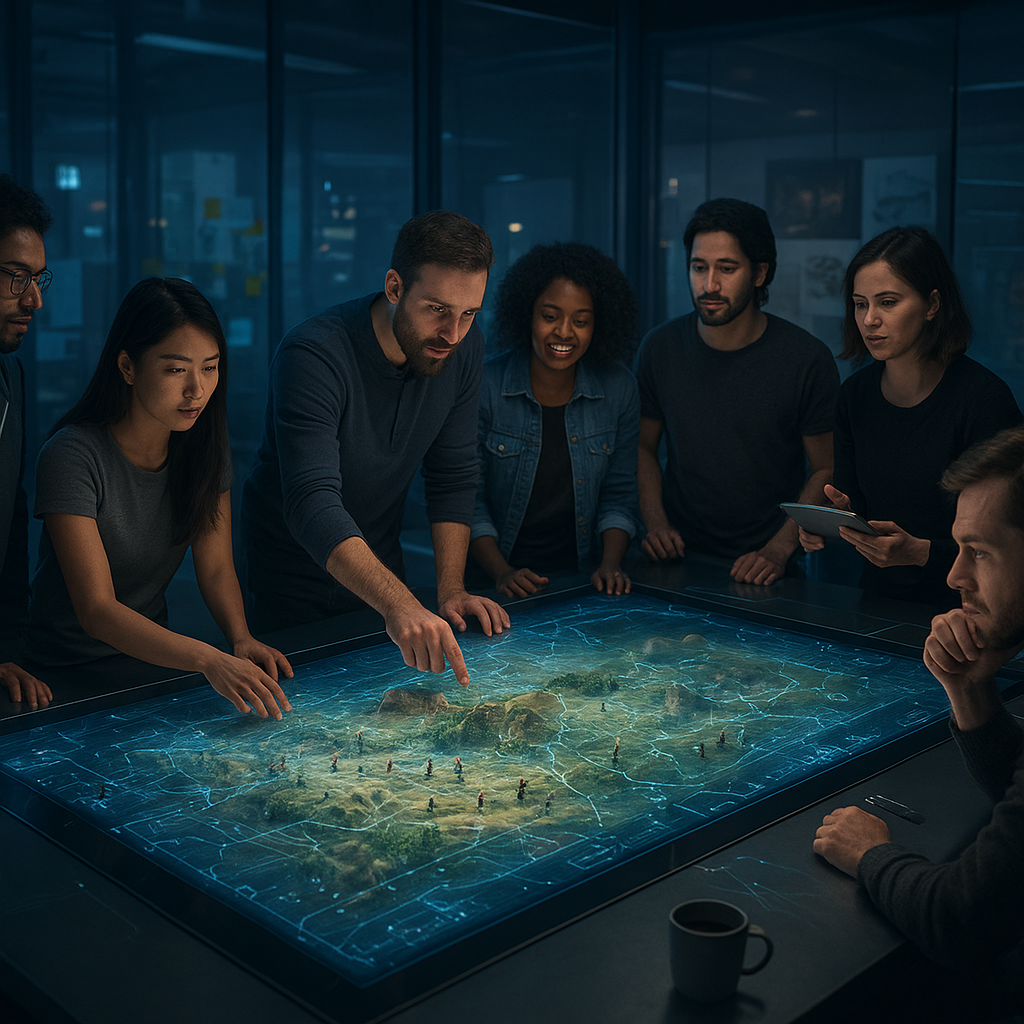
Several studios are already exploring what this might look like in practice. The challenge is less technical than it is philosophical — how much of a game’s identity can shift before it stops being a designed experience and becomes something else entirely?
Ethical Considerations That Can’t Be Ignored
With all of this potential comes a set of ethical questions that the industry is only beginning to grapple with seriously. Key concerns include:
- Intellectual property: Generative AI models are trained on existing creative work, raising complex questions about ownership, consent, and compensation for the artists whose work informed the training data.
- Labour displacement: As AI automates more of the content creation pipeline, the nature of creative roles in game development is changing — not necessarily disappearing, but shifting significantly.
- Player manipulation: AI systems optimised to maximise engagement could, if poorly governed, be used to exploit psychological vulnerabilities rather than enhance genuine enjoyment.
- Bias in AI systems: AI trained on biased datasets can reproduce and amplify those biases in game content — in character representations, narrative assumptions, and more.
These aren’t hypothetical concerns — they’re active conversations happening within development studios, academic institutions, and regulatory bodies right now.
What This Means for Players
For the average player, much of this is invisible infrastructure. You don’t need to understand reinforcement learning to appreciate that the enemies in a game feel smarter, or that the world feels more alive, or that the difficulty curve actually matches your skill level for once. The best AI in games is the kind you never consciously notice — it simply makes the experience feel right.
But players are also increasingly finding themselves in the position of co-creators. Games with AI-driven systems that respond to player choices in sophisticated ways blur the line between designed experience and emergent one. In some respects, every playthrough becomes unique — shaped not just by developer intent, but by the specific decisions and behaviours of the individual playing.
Conclusion
Artificial intelligence has moved from the margins of game design to its very centre. It is reshaping how games are built — accelerating content creation, enabling more believable characters, and opening up possibilities for personalisation that simply didn’t exist a decade ago. At the same time, it is raising genuinely difficult questions about creativity, ownership, labour, and the kind of experiences that games should aspire to deliver.
The technology itself is neither inherently good nor bad for gaming — its impact depends almost entirely on how developers choose to deploy it. Used thoughtfully, AI has the potential to make games more immersive, more accessible, and more creatively ambitious than ever before. Used carelessly or opportunistically, it risks flattening the creative diversity and human craft that makes games worth playing in the first place.
What’s certain is that this conversation is only going to intensify. As AI capabilities continue to advance, game designers, players, critics, and policymakers will all need to think carefully about what they want from this technology — and what they’re willing to trade for it.