
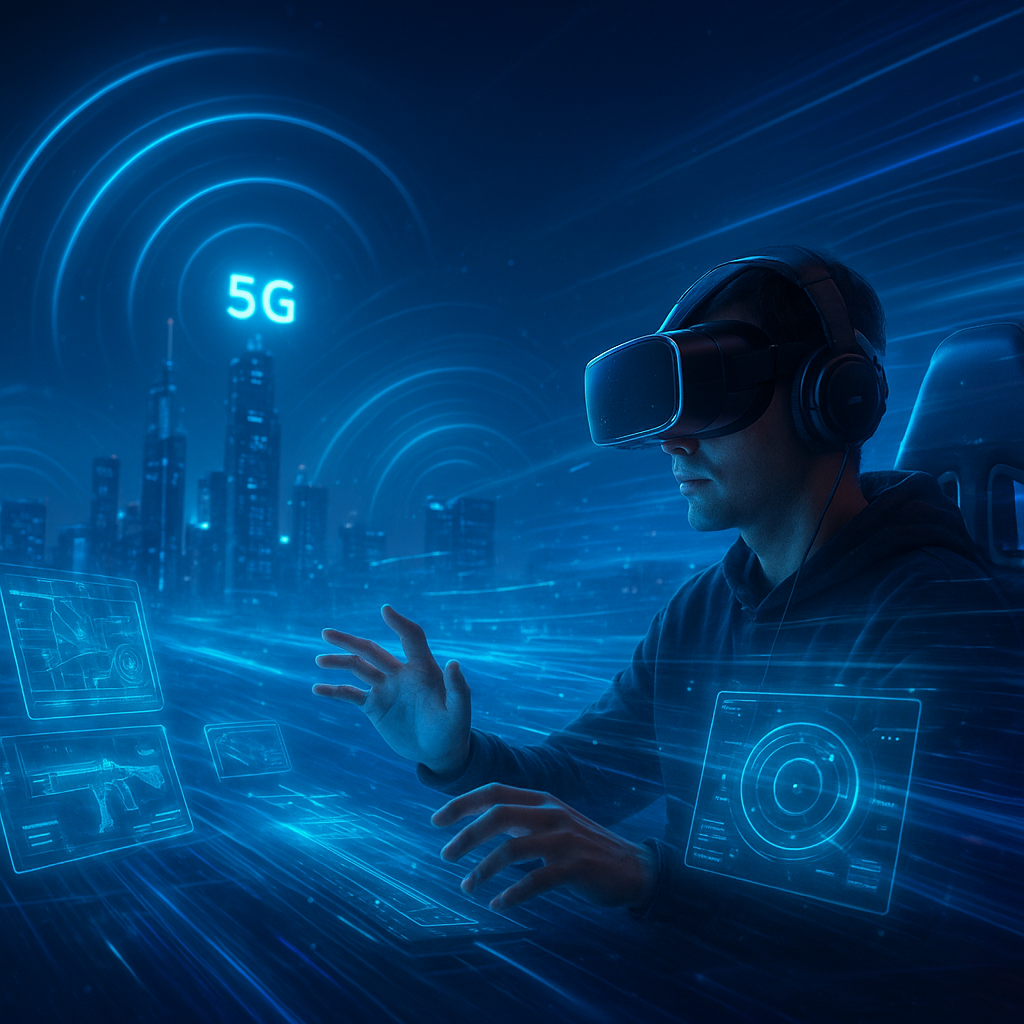
The rollout of 5G technology has been one of the most talked-about technological developments of the past decade. From government policy discussions to heated debates in tech forums, few innovations have generated quite as much anticipation — and controversy — as the fifth generation of wireless networking. But beyond the buzzwords and the marketing, what does 5G actually mean for everyday life, for global society, and most importantly for the gaming community?
This article takes a deep dive into the real-world implications of 5G, examining how it reshapes connectivity, influences industries, and fundamentally changes how games are played, developed, and experienced. Whether you’re a casual mobile gamer or a hardcore PC enthusiast, 5G is already beginning to alter the landscape in ways that deserve serious attention.
What Is 5G Technology and How Does It Work?
Before examining the impact, it’s worth understanding the fundamentals. 5G stands for “fifth generation” mobile network technology. It succeeds 4G LTE and offers dramatically improved performance across three key metrics: speed, latency, and connection density.
Unlike its predecessors, 5G operates across multiple frequency bands. Low-band 5G offers broad coverage with modest speed improvements, mid-band 5G delivers a solid balance of speed and range, and high-band millimetre wave (mmWave) 5G provides blazing speeds but with limited physical range. In practice, most users will experience a combination of these, depending on their location and carrier.
- Speed: Peak theoretical speeds of up to 20 Gbps, compared to 4G’s 1 Gbps ceiling
- Latency: As low as 1 millisecond, versus 30–50ms on 4G networks
- Connection density: Capable of supporting up to 1 million devices per square kilometre
These improvements aren’t just incremental — they represent a generational leap that enables entirely new categories of application and service, both within gaming and across the broader economy.
The Broader Societal Impact of 5G
5G isn’t just about faster Netflix streaming or smoother video calls. Its societal implications stretch across healthcare, transport, urban planning, and education. Understanding these broader impacts helps contextualise just how significant a shift is underway.
Healthcare and Remote Services
One of the most profound areas of impact is healthcare. Remote surgery, real-time patient monitoring, and the transmission of high-resolution medical imaging all become far more viable with 5G’s ultra-low latency and high bandwidth. In rural or underserved areas, 5G could bridge critical gaps in access to specialist care.
According to a report from the World Economic Forum, 5G is expected to unlock an estimated $13.2 trillion in global economic value by 2035, with healthcare representing one of the largest beneficiaries. That’s not a small footnote — it’s a wholesale transformation of how essential services are delivered.
Smart Cities and Infrastructure
5G is foundational to the concept of smart cities. With the ability to connect millions of sensors and devices simultaneously, urban planners can implement responsive traffic management, reduce energy consumption, and improve public safety systems. Cities like Barcelona, Singapore, and Manchester are already piloting smart city initiatives that depend on 5G infrastructure.
The ability to process data in near real-time — rather than sending it back to a centralised server for analysis — also enables edge computing, which works in tandem with 5G to dramatically reduce processing delays. This has enormous implications for autonomous vehicles, for instance, where a split-second delay could have life-or-death consequences.
The Digital Divide: A Critical Concern
It would be naïve to discuss 5G’s benefits without acknowledging its risks. A major societal concern is that 5G infrastructure investment is heavily concentrated in urban, affluent areas. Rural communities — already disadvantaged in terms of digital access — risk being left even further behind as the technology gap widens.
Furthermore, the geopolitical dimensions of 5G deployment — particularly debates around infrastructure security and the role of manufacturers like Huawei — have introduced new layers of complexity into how nations approach digital sovereignty. 5G is not merely a technical question; it is a deeply political one.
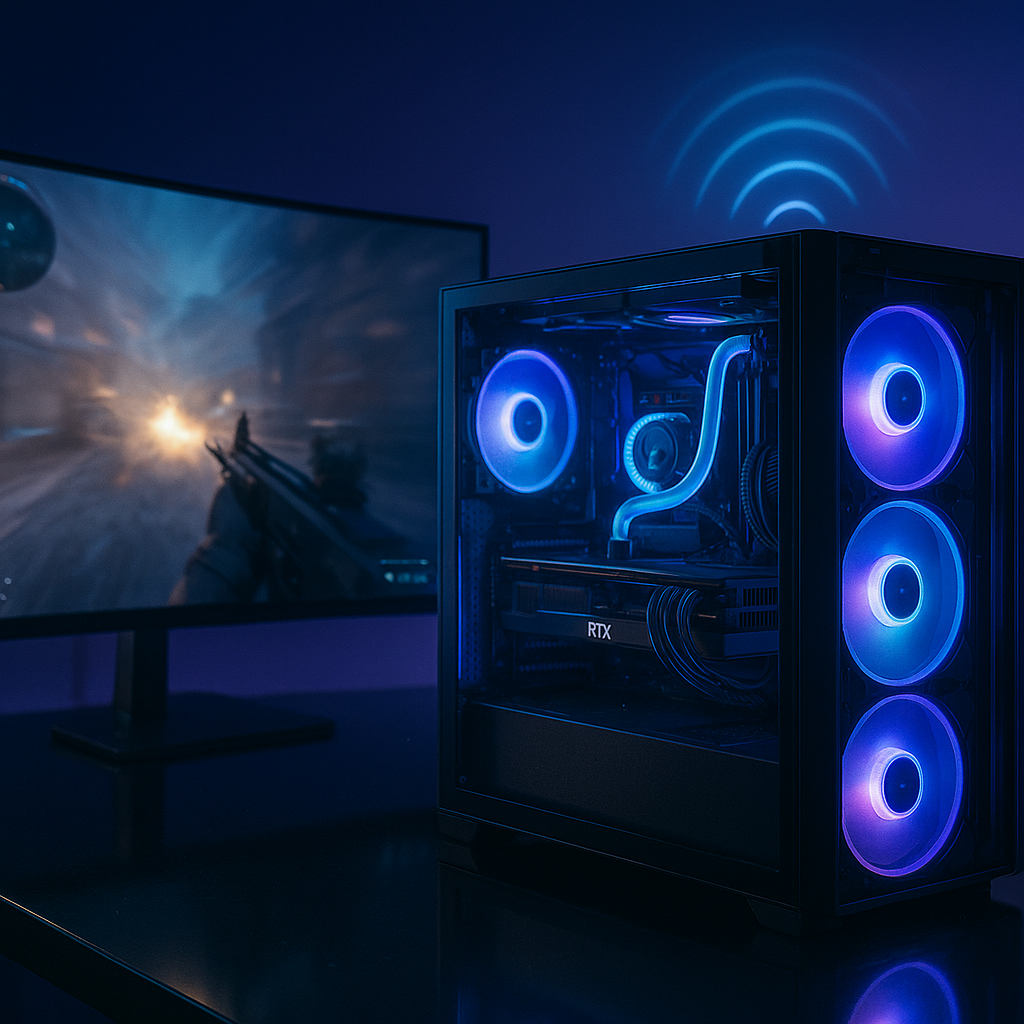
5G and the Gaming Industry: A Genuine Revolution
For gamers, 5G represents something close to a paradigm shift. The gaming industry has long been constrained by the limitations of mobile networks and the need for physical infrastructure like ethernet cables and home broadband routers. 5G begins to dismantle those constraints in meaningful ways.
Cloud Gaming Finally Comes of Age
Cloud gaming — the ability to stream and play high-end games directly from remote servers without the need for powerful local hardware — has existed in various forms for years. Services like Xbox Cloud Gaming (formerly xCloud), NVIDIA GeForce Now, and PlayStation Remote Play have all attempted to make it mainstream. The problem has consistently been latency. Even modest delays between input and on-screen response make games feel sluggish and unresponsive.
With 5G reducing latency to as low as 1ms, cloud gaming becomes genuinely viable for a much wider audience. A gamer on a mid-range smartphone could theoretically run a graphically demanding AAA title streamed from a server, with response times indistinguishable from a local machine. This has massive implications for accessibility — suddenly, the barrier of expensive hardware is removed.
Microsoft has already begun testing 5G-optimised cloud gaming experiences, and early results suggest that the technology is maturing rapidly. The question is no longer whether cloud gaming will work on 5G, but rather how quickly infrastructure will reach the scale needed to support it broadly.
Mobile Gaming Reaches New Heights
Mobile gaming is already the largest segment of the global gaming market, generating over $90 billion in revenue in 2023 according to Newzoo. But many mobile games are deliberately designed with low network requirements in mind, because current mobile infrastructure simply can’t reliably support more demanding experiences.
5G changes that equation. Developers can begin building mobile games with the assumption of near-zero latency and high bandwidth, enabling experiences that were previously impossible on handheld devices. Imagine open-world multiplayer games on your phone with no compromise on visual fidelity or network performance — that future is closer than many realise.
Augmented and Virtual Reality Gaming
AR and VR gaming have always promised extraordinary experiences, but have historically been hampered by two obstacles: hardware constraints and network limitations. The latter is particularly problematic for multiplayer VR environments, which require continuous, high-speed data transmission to keep shared virtual spaces synchronised across all participants.
5G addresses the network side of that equation head-on. With sufficient bandwidth and low latency, VR multiplayer environments can be far more stable, immersive, and populated. This is especially exciting for the emerging category of location-based AR gaming — experiences that overlay digital content onto the real world, as popularised by Pokémon GO, but with vastly greater complexity and interactivity.
Competitive Gaming and Esports
Esports is a multi-billion-pound industry where milliseconds can determine outcomes. Professional players are acutely sensitive to latency, and tournaments go to considerable lengths to ensure network performance is optimal. 5G opens up new possibilities for how esports events are organised, broadcast, and experienced.
For spectators, 5G enables richer, more immersive broadcast experiences — including multi-angle viewing, real-time statistics overlays, and potentially AR-enhanced commentary. For players, it means the ability to compete at a high level from a broader range of locations, without the traditional reliance on wired connections.
Challenges and Criticisms Worth Considering
It would be intellectually dishonest to present 5G as an unambiguous good. There are legitimate challenges that need to be addressed before its full potential — in gaming and beyond — can be realised.

Infrastructure Rollout Is Uneven
Despite billions in investment, 5G coverage remains patchy in many countries. In the UK, major cities like London, Manchester, and Birmingham have reasonable 5G coverage, but significant rural areas remain entirely unserved. For gaming applications particularly sensitive to network quality, inconsistent coverage means inconsistent experiences.
Battery Consumption and Device Heat
5G radios consume considerably more power than their 4G counterparts. For mobile gamers, this creates a practical trade-off: enjoy the benefits of 5G connectivity, but at the cost of battery life and potential device heating. Chipmakers like Qualcomm are working to improve efficiency, but this remains a real-world limitation for portable devices.
Security and Privacy Concerns
A more connected world is also a more vulnerable one. 5G dramatically expands the attack surface for cybersecurity threats, particularly as it enables the proliferation of IoT devices that often have weak security implementations. For gaming specifically, this raises concerns around data privacy, account security, and the integrity of competitive environments.
What Does the Future Hold?
The trajectory of 5G adoption suggests that many of the current limitations are temporary. As infrastructure matures, as devices become more efficient, and as developers begin to truly design around 5G’s capabilities rather than simply adapting existing designs, the technology’s full potential will become clearer.
Looking ahead, 6G research is already underway in several countries, with theoretical speeds and latency figures that make 5G look modest by comparison. But that remains a distant prospect. For the next decade at least, 5G will be the defining network technology shaping how people connect, communicate, and play.
For the gaming industry specifically, the convergence of 5G, edge computing, artificial intelligence, and advanced display technologies points toward a future where the boundaries between gaming, social interaction, and the physical world become increasingly blurred. The foundations being laid now will determine the shape of that future.
Conclusion
5G technology is not simply a faster version of what came before. It is an infrastructural shift that enables fundamentally new possibilities — in healthcare, urban management, business, and most relevantly here, in gaming. From making cloud gaming genuinely competitive, to unlocking sophisticated AR and VR experiences, to enabling the next generation of mobile titles, 5G’s influence on the gaming world is already being felt and will only deepen over time.
At the same time, it’s important to approach this transformation with clear eyes. The benefits of 5G are unevenly distributed, the rollout remains incomplete, and legitimate concerns around privacy, security, and the digital divide deserve ongoing attention. Understanding both sides of the 5G story is essential for anyone seeking to make sense of where technology — and gaming — is headed.
As coverage expands and the ecosystem matures, 5G will progressively move from a novelty to a baseline expectation. For gamers, that shift cannot come soon enough.